Assessment & Monitoring
back to patients menu


Assessment - Blood Tests     Assessment - x-rays     Assessment - General
Assessment - Examining Joints     General Monitoring     Blood monitoring


An x-ray of the hands showing changes that can develop in Rheumatoid Arthritis
(Reproduced by kind permission of Abbott Laboratories, UK)

When you see the doctor or nurse there will be a general assessment of your health. In addition the team will also want to focus on the assessments necessary to see how your arthritis is. The level of assessment and monitoring you have will depend upon your condition. That is why it is important for you to understand your arthritis and know how to cope with your arthritis. For further information see How to manage your Arthritis and Why See a Nurse?

Assessment - General
back to top
Your doctor, nurse or healthcare practitioner will need some information from you about your arthritis to help them assess how well controlled the arthritis is and how you are coping generally. Some of the questions you will be asked by your healthcare will include:

Are you feeling generally well?

How you feel generally apart from the problems you are experiencing with your joints will be important for the doctor or nurse to know. This will help them focus on specific ways of resolving your problems and exclude any other problems that might be contributing to your arthritis.

However, if you are feeling generally unwell this will mean a wider assessment of your health and your arthritis. Some types of arthritis cause ‘systemic effects’ (e.g. problems that could affect you generally) that must be assessed. Some examples of a 'Systemic effect' that can cause problems to other parts of your body (apart from your joints) are feelings of tiredness, fatigue or more specific problems related to your health for instance a condition called Psoriatic Arthritis also affects the skin. Some forms of arthritis have a 'systemic effect' and others don’t.

If you know your type of arthritis does not have 'systemic effects' then it might be useful to review your problems and decide if they are related to your arthritis or other problems.

Do you have stiffness of the joints?

Stiffness and pain can sometimes be difficult to separate with the discomfort of arthritis. Stiffness is usually the difficulty in 'getting going'. Pain is the experience you may have on initial movement. The doctor or nurse will want to know when you have stiffness in the joints and how long that stiffness lasts. This can help the teams know how best to help you.

In Osteoarthritis stiffness in the joints is often after sitting down for a while or periods of inactivity. It improves on movement. Sometimes one or two joints maybe especially painful and have inflammation. So understanding when the pain/stiffness occurs, which joints are affected and how long the discomfort lasts will help the team know what to do to relieve those symptoms.

Many types of arthritis can often have inflammation in the joint. A general term to cover all these types of arthritis is 'inflammatory arthritis'. There are many of these types of inflammatory arthritis but some of these include Rheumatoid Arthritis, Psoriatic Arthritis, Ankylosing Spondylitis and Reactive Arthritis. Inflammation in the joints due to the 'inflammatory' types of arthritis usually means that the stiffness is experienced most in at the beginning of the day. This is usually called Early Morning Stiffness (EMS). The length of time that the EMS lasts can be an indicator of how active your arthritis is.

The length of time is usually calculated in minutes and so you can measure for yourself how long your EMS lasts. It should be measured when you first get up and moving around with difficulty in the morning to when you feel you are moving reasonably freely. The increase in EMS can be a clue to an increase in the activity of the arthritis. This is often called a 'flare' (see Managing Pain and How to manage your Arthritis).

Do you have any pain?

Pain can be very difficult to describe. There are a number of important points that might help you to think about the pain you experience and how to explain the sensations you experience:

How bad is the pain?

Can you score the level of pain you have out of 10 with 10 being the worst possible pain you have ever experienced and 0 being no pain whatsoever? You may be asked in clinic to mark a line which has 'no pain at all' on the left hand side and at the other end of the line has 'unbearable pain'. You will be asked to make a mark on the line indicated where you feel your pain has been along the line. This helps us to measure changes in your pain from one point in time to another. This is important as pain is a unique and individual sensation and changes should be measured against your own personal experience of pain and whether it is best or worse than last time you were seen. Examples of how these are used can be seen on this link:
Pain Scales

When do you experience the pain?

Is the pain all the time, constantly whether you are staying still or moving? Is there a difference when you are bearing weight on the joint or not? These questions will help the doctors and nurses caring for you understand the current problems and find ways of resolving the pain. Finding ways to protect joints can reduce the pain. For instance a painful knee may be helped by the use of a walking stick to relieve the weight on the joint. If the pain is constant the healthcare team will want to look at further information to guide their diagnosis of your problems (for instance they may wish to examine the joints, take blood tests or consider taking some fluid from the joint to analyse the fluid in the joint). In some cases they may want to take an x-ray.

It is helpful to try and think about the pain, when it is worst, what relieves the pain and what particular movements may increase the level of pain or reduce the joints ability to work. For example some people experience 'locking' in the knee joint which feels like the joint cannot move anymore. This may be on going up or down stairs. A useful article on pain and how pain works can be found on the National Rheumatoid Arthritis Society website: www.rheumatoid.org.uk

What have you been doing to relieve the pain?

There are a number of ways to help relieve pain. Some pain relief is achieved using medicines but there are a number of ways of relieving pain using cold packs, rest and joint protection techniques (see Managing Pain). What your doctor or nurse will want to know is what methods you are using and are they effective, how often are you taking your medications and at what dose? Are you taking them regularly to ensure you keep control of the pain? It is important to mention all treatments you are using to reduce the pain. This should include any alternative or complimentary therapies or other tablets you might have bought from your local chemist or health food shops.

What other tablets are your taking for other problems?

The doctors and nurses need to be sure that the medications will not interact with any other treatments you are taking or cause unacceptable side effects. It may also help them to decide what tablets they choose to prescribe for you, for instance some important types of pain relief for arthritis can be a problem for people who have problems with their heart, stomach or kidneys.

How do you feeling you are coping with your arthritis?

This is a very important question, not only because it often gives you an opportunity to talk about other things that are happening in your life. You may also feel that other things may be complicating the way you cope with your arthritis. It does help the team to understand your view of your condition. There are a number of things that can affect how you cope both mentally and physically with your arthritis. In the same way that if you were holding down a challenging full time career other factors can affect how you manage your workload. These can include family matters and the level of understanding or support you have from the family. Whether there are any specific worries or difficulties (for instance having Rheumatoid Arthritis and having a disabled child with a long term chronic disease) will have a big effect on your workload and how you will cope both financially and physically.

Your own views and previous understanding of arthritis and particularly the type of arthritis you have may form a view about how you cope mentally with the disease. It is important if you have concerns about your disease that you ask to see a nurse/practitioner to give you enough time to discuss these issues and ensure that you have sufficient information to help you understand your disease. see What is Arthritis, How to Manage your Arthritis,
Why See a Nurse?

There is a valuable information leaflet that you might like to look at before you attend a clinic appointment. Attachment: Questions to Ask Leaflet (pdf 81kb)


Assessment - Examining joints
back to top
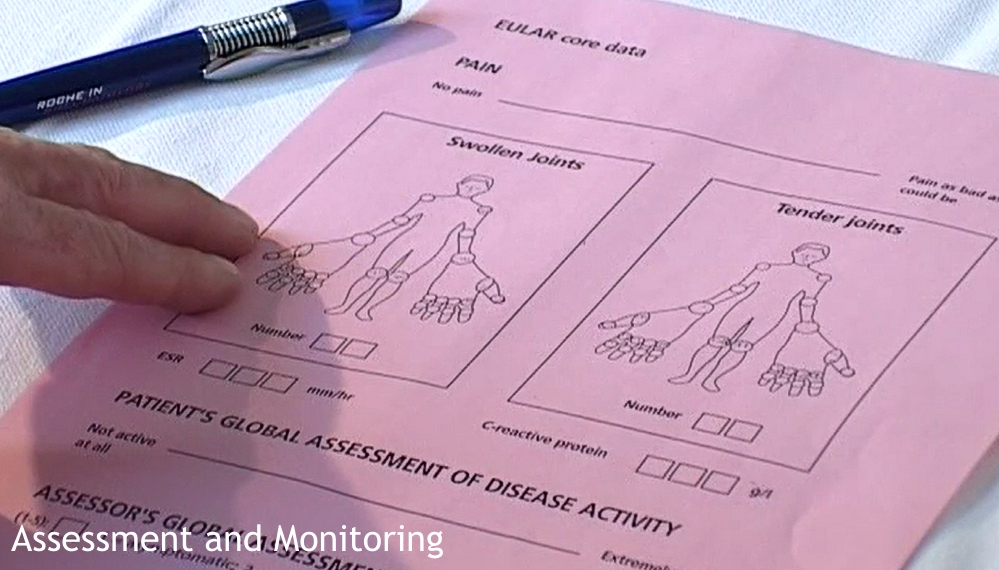
Your joints will be examined when you attend clinic. The number of joints that will be examined will vary depending upon the type of arthritis you have, how your arthritis is at the time of the consultation and whether you require a need a regular joint assessment because of the treatments you are receiving. In many hospital clinics a full joint assessment is undertaken by a rheumatology specialist nurse/practitioner. Sometimes you might be seen in a clinic in the community by a physiotherapists, nurse or doctor. These are sometimes called Triage, Musculoskeletal clinics or Clinical Assessment Teams

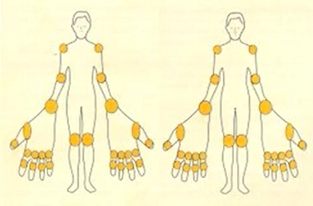
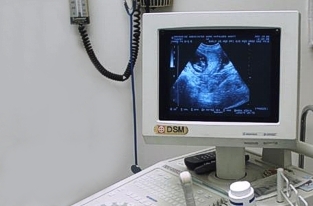
The examination will include examining for pain in individual joints as well as swelling. The swelling sometimes isn't easy to see but can be identified by skilled practitioners. Sometimes this is can be seen using an ultra sound machine which can see the inflammation and fluid in the joints.

You may also have your joints examined to see how well your joints move. The way your joints move will help to identify specific problems you may be having. For instance you may be asked to put your hands behind your head. This will help the practitioners see how wide your range of movement is and if movement gives you pain. For example you may be unable to make some movements due to pain or swelling.
 

Some patients, particularly with inflammatory arthritis (for example Rheumatoid Arthritis) require regular treatment for their arthritis (see Medications) and will be asked to have a regular assessment called a Disease Activity Score 28 (DAS 28). This set of measures is used to assess the how active the disease is at the time and also includes a measure of how you feel your arthritis is. Only a certain amount of joints are assessed using the DAS 28. This is an assessment tool that has been well researched and shown to be a good measure of overall disease activity. The DAS 28 is an important assessment tool that is often used for ensuring someone is eligible for new therapies such as biologics (see Medications).

The National Institute of Clinical Excellence have set out criteria for treatment with some of these drugs (usually given by subcutaneous injection or intravenous infusion) and information can be seen on www.nice.org.uk (Technical Appraisal 36). In 2008 this guidance is due to be reviewed. The decisions NICE make are very important as NHS organisations in England and Wales have to follow their recommendations including who can receive these therapies and when they can be started or stopped.


Assessment - x-rays
back to top
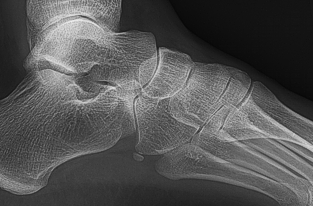
You may be asked to have an x-ray before attending the hospital department to be seen. However, again, this will depend upon what your problems are and whether they will help the diagnosis. Unnecessary exposure to X-rays means that you should only be having an x-ray if:
 

  • It is to assess current level of damage,
     
  • Measuring effectiveness of treatments or disease activity
     
  • Or it helps to make a diagnosis
     

An example of an x-ray can be seen at the top of the page. The x-ray of the hand shows different types of damage as a result of Rheumatoid Arthritis. Women who think there is any risk that they might be pregnant should make sure they inform the doctor or nurse – x-rays should be avoided wherever possible, particularly in the early phases of the babies development.


Assessment - Ultra Sound or MRI

Increasingly it has been shown that other types of examinations (other than the usual type of x-ray) can be more effective in identifying early signs of inflammation and possible early signs of damage or changes in the bone and tissues surrounding the bone. Ultra sound can see more of the inflamed tissues that surround the joint before x-rays can identify any changes.

This is becoming an area of great interest for some types of arthritis where it is now clear that the earlier we treat these very early signs of inflammation in the joint the less long term damage that can occur to the individual with arthritis. This is of particular benefit for people with Rheumatoid Arthritis.

MRI is not routinely used by maybe used in some circumstances when other types of investigation do not provide sufficient information to help the doctor identify the problems you might be experiencing. MRI use a powerful magnetic fields that beamed through the body to provide pictures transmitted to a computer system. It is possible to take pictures of all parts of the body from different angles. It can show fluid, fat and other soft tissues in relation to the joints and organs in the body.

Ultra-sound scanning uses a little probe (like a pen/or wiper) that is run over the area to be looked at – a jelly like substance is used to help the probe pick up the images but it doesn’t hurt and nothing penetrates the skin. Ultra sound is carried out by a trained healthcare professional and can identify very early signs of inflammation.


Assessment - blood results
back to top
You may require some blood tests to be taken, again this will depend upon the type of arthritis you have. An excellent information leaflet from www.arc.org.uk is available on blood tests and investigations in arthritis.

Some of the tests will include blood tests to examine your general blood picture for instance if you are anaemic, have any infections and have the right balance of red and white blood cells. Other tests will be looking at different types of inflammation or immune responses in your body or levels of certain types of elements that might be a bit higher in some people with certain types of arthritis (for instance gout may have an increase Uric Acid measure in their blood).

Other tests such as the rheumatoid factor or tests specifically used if conditions such as Rheumatoid Arthritis are suspected. However, the test on its own has little value and is only used when you have been properly examined and a good medical history has been taken. You may still have Rheumatoid Arthritis even if you have had a blood test that show you do not have ‘rheumatoid factor’ present in your blood. Equally you can have a rheumatoid factor positive test but may not have rheumatoid arthritis.

A newer blood test is now being used in some centres called anti-CCP. Research continues to understand more about this blood test but it appears to be of more value in helping doctors diagnose rheumatoid arthritis and seems to be more helpful in identifying those who need prompt and early treatment and may be better in some circumstances than the Rheumatoid Factor positive test. You may have both tests taken.


Regular blood Monitoring
back to top


If you are being reviewed regularly in a community clinic or hospital department for your arthritis it is likely that you will be asked to have blood tests and x-rays from time to time. If you are receiving drugs to control your arthritis (such as Methotrexate, Sulfasalazine, Penicillamine, Gold, Leflunomide, Ciclosporin or any of the newer treatments often called biologics, these include treatments such as B cell therapies (Rituximab) or anti-Tumour Necrosis Factor Alpha treatments (Adalimumab, Etanercept, Infliximab) you should be having regular blood tests. Some hospitals have a special monitoring system in their department and others arrange to share the management of blood monitoring and review of the tests with your own General Practitioner (GP). It is important that you know the system used in your local area and that it ensures you are safe on treatment.

In many units there is an educational programme to help you understand your arthritis and some of these include information on your blood tests and what to look out for in the blood results, depending upon the treatment you are on. Ideally you should know what your blood tests are and have a copy of them in a monitoring booklet. This is extremely helpful if you are travelling abroad with your medications, or for you to learn more about these bloods tests. If you are unsure about the blood monitoring arrangements at your hospital or health centre ask the rheumatology team or practice nurse to advise you. An example of a monitoring booklet; Shared Care Monitoring Booklet

Learning about your blood tests may help you to understand a little more about what happens when you have a flare or an infection and how to identify problems with your blood results.


General Monitoring
back to top
If you are being seen regularly by your doctor/nurse or rheumatology department because of your arthritis they will want to assess you for a number of reasons. These include:

  • Checking that the treatment you are on is working well and controlling the disease effectively.
  • Assessing whether you are coping well and your mobility and range of movements is maintained.
  • Ensuring that you are safe and on treatment and there are no side effects as a result of treatment.
  • Reviewing your pain control and ensuring that you are controlling that effectively.
  • Checking you have the appropriate level of support to cope with your arthritis.

The monitoring of your arthritis will again vary according to the type of arthritis you have. Not all types of arthritis require a regular assessment and review but information and support should be available for you from your health centre to help you to manage your arthritis and know where to get help should you require it.

If you are attending clinic regularly it is likely that you will be asked the questions we have discussed in this section. In addition your joints maybe examined, blood tests and x-rays will be reviewed and additional examinations maybe necessary depending upon the arthritis you have. You may also be asked to see a member of the rheumatology team to assess you or help to resolve problems identified in clinic. These include:

  • Pain management reviews.

  • Functional assessment - to see if you are able to manage all the practical aspects at home and work with the appropriate equipment to ensure you protect your joints and use your energy effectively.

  • Exercise advice and joint assessments - exercise is an important part of most types of arthritis - maintaining a good range of movements will help you to keep active and fit.

  • Review of footwear and devices to improve mobility - sometimes simple things that an arch support can stop further damage to joints or changes to the normal function of the joint.

  • Equipment support - walking sticks, bath aids, kettle tippers and other pieces of equipment can be useful.

  • Psychological support - there are times when how you cope mentally with your arthritis can be supported by additional guidance on support on how to focus on positive aspects of coping. This may be provided by a nurse/ practitioner, or a psychologist who understand the needs of those with arthritis.

  • Dietary advice. A good healthy balanced diet is important for all individuals not just those with arthritis, however, sometimes additional support for dietary advice can be especially helpful with some types of arthritis (e.g. gout).

See also Why see a Nurse?

All these specialists will have their own specific assessment and monitoring methods. When you have seen one of these practitioners you can ask them how they will measure the benefit of treatment and what they need to know from you when you attend clinic next time.


Susan Oliver Associates

Disclaimer


© copyright Susan Oliver 2008