|
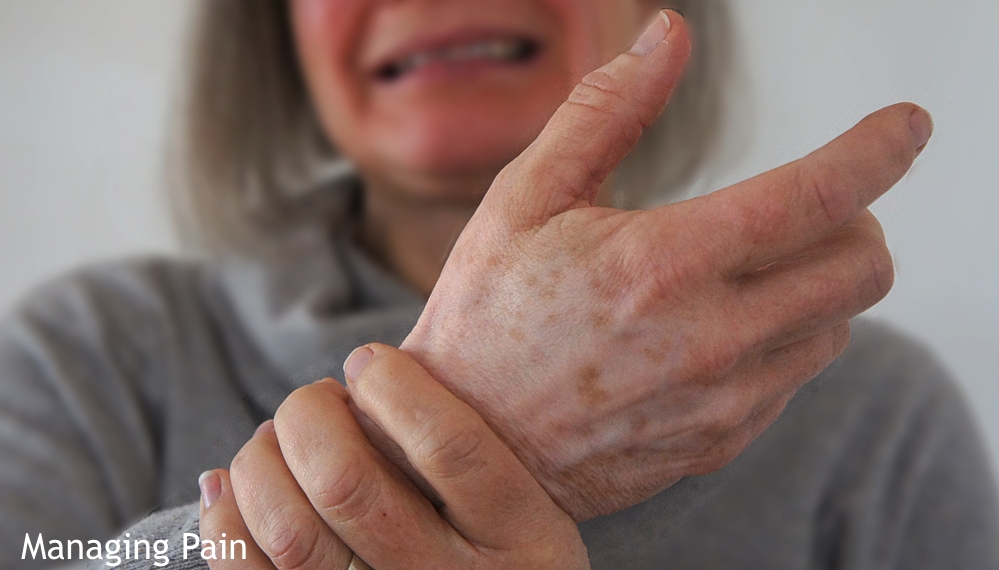
Arthritis is a word used to describe
pain in your joints. The pain can be felt in a number of ways. If you have
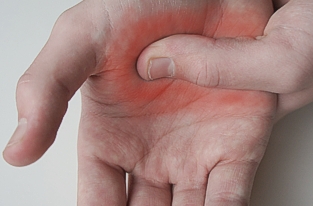
inflammation in or around the joint this is likely to cause swelling,
redness, and heat but sometimes just a damaged or worn joint may also
cause pain. These problems may also make you reluctant to move you joint
or give you difficulty on movement. Pain caused by damage or inflammation
can cause a strain and discomfort to the muscles surrounding the joint.
There are many reasons for pain in joints and the most common one that
most of us are aware of is the damage and discomfort that is experienced
with osteoarthritis. Although osteoarthritis is very common it is
important that you know what type of arthritis you have as this will help
you understand the best way of managing your pain and the difficulties you
experience as a result of the joint discomfort. See the section on
What is Arthritis. For instance if you have joint problems that have
been diagnosed as Rheumatoid Arthritis the type of treatment you will need
may be different to the treatment for Osteoarthritis or Ankylosing
Spondylitis.
One of the hardest things to learn to manage is how to control pain. The
information in this pain management section should provide some examples
that may help you improve your pain control. I have also written a useful
article for the National Rheumatoid Arthritis Society which you can access
on (www.rheumatoid.org.uk/article.php?article_id=300).
If you use this information and develop a programme of pain control that
includes a number of pain relieving options highlighted in this section,
allow at least a week following the changes before you decide if it has
helped your pain control.
However, if you have an opportunity to take part in educational or
specialist self management programmes it is likely that these will help
you to reinforce your own pain management strategies and improve your
knowledge of how to manage your disease.
Pain control back
to top
Pain can be disabling and lead to chronic fatigue and a sense of
hopelessness. Pain control needs to be tailored to the individual person
and their lifestyles, the level of pain experienced and in some cases how
active the disease is at the time of the increase in pain.
We are all unique individuals and we all have different ways of thinking
about health, illness and sensations like pain. How you think about health
and illness may also have an effect on how you cope with pain. Most people
have experienced some sort of pain before developing arthritis. It may be
that your previous experience of pain will affect how you feel you can
cope with the pain you may experience with arthritis. Sometime it can help
to discuss how you see your illness and how you feel able to cope with the
problems you experience. If you are seeing a consultant about your
arthritis it should be possible for him to refer you to a specialist nurse
or practitioner who can see you and provide specific advice on pain
control and education about your disease and any tablets or treatments you
might be prescribed. See the section on Why See a Nurse?
In some parts of the United Kingdom there are expert patient programmes
that have been introduced to help people learn about coping with a chronic
illness. Although these programmes do not focus on the specific issues
related to arthritis they can be helpful. If you have rheumatoid arthritis
The National Rheumatoid Arthritis Society (NRAS) do have volunteer
training programme for individuals with Rheumatoid Arthritis. (www.rheumatoid.org.uk).
If you are seeing a rheumatologist you should have access to a
multidisciplinary team. The multidisciplinary team consists of doctors,
nurses or practitioners, physiotherapists, occupational therapists and
podiatrists. See the section on Why See a Nurse? The team usually has
educational programmes specifically tailored to the needs of patients with
arthritis (in hospitals this programme is usually for diseases such as
Rheumatoid Arthritis).
The expert patient programme can be helpful for everyone who wants to
understand how to manage their condition. For those with Osteoarthritis
there are only a few specifically tailored packages to teach you about
coping with your arthritis. Some of these are held by Arthritis Care
Groups across the country and may be available in your area (www.arthritiscare.org.uk).
The expert patient programme is a training programme that can be offered
to you from your own GP surgery or from a hospital team. For Rheumatoid
Arthritis see www.rheumatoid.org.uk. The Arthritis and Musculoskeletal
Alliance (ARMA) is an organisations that works with all patient
organisations for people with different joint problems and may be a useful
link for finding additional information www.arma.uk.net
In the meantime here are some important facts that may help you in
managing your pain:
Medications for pain back
to top
All pain relief medication should be taken at regular time intervals when
you are trying to get effective pain control. Many people make the mistake
of only taking their tablets to relieve pain when the pain is very bad and
then wonder why the tablets have not worked. The brain is sensitive to
pain messages from the body and if you only take medication occasionally
the brain will not be able to 'turn off' the 'help I have pain' messages
sent from the painful areas (such as a knee or hip) to the brain. Regular
pain relief helps to break the cycle of pain messages going from the
painful joints to the brain. This means that the brain keeps sending out
pain messages to the body alerting the body about the pain. If pain relief
is used regularly this breaks the cycle. For an easy to follow detailed
explanation on the pain and the pain cycle see the arc leaflet on pain (www.arc.org.uk)
and the Pain Relief Handbook by Dr. C. Wells & Graham Nown
ISBN0-09-181371-9. See also article on pain at (www.rheumatoid.org.uk/article.php?article_id=300).
Achieving good pain control is about using a group of pain control methods
as an overall long term plan. So if you are unable to control your pain it
may be right for you to consider taking regular pain control medications
with pacing strategies, rest and the use of an aid or device such as a
walking aid if you have knee or hip problems. When you have good pain
control and you feel the problem has settled - then you should gradually
reduce the pain medications. You should think of it as:
1. Step up - when the pain is beginning to be difficult to control -
review your pain control strategies and increase medication (according to
the medication instructions you were given by your doctor, nurse or
pharmacist)
And
2. Step down - when the pain is well controlled review how to gradually
reduce your pain control medications and additional strategies (e.g.
reduce resting time) and gradually continue to reduce them as long as the
pain remains controlled.
Note: When discussing medications it is important that the advice outlined
below is only a guide. Medications you take should be used according to
the advice provided by the manufacturer of the product. If the medications
are prescribed by your doctor, nurse or pharmacist you should check with
them before making any changes to your medications. You should not exceed
the prescribed dose and check that you are safe to take the medications
(reading the literature provided with the tablets will provide this
information).
1. Pain Relief
Analgesia is a word used to describe medications to relieve pain. There
are a number of types of medication that you need to know about
These include:
• 'Simple' pain relief tablets (analgesics) - many of these can be bought
over the counter at the chemist. They are called ' simple' because they
are made up of only one type of drug (e.g. paracetamol or aspirin). A
tried and tested effective 'simple' pain relief tablet is paracetamol
(called Acetaminophen in America). Paracetamol can be very effective
particularly if taken regularly and at the right dose.
• Creams and packs that you can use to apply to the painful joints,
sprains and strains. Some of these are anti-inflammatory creams (e.g.
ibuprofen). It is important to know that when creams that are applied to
the skin if applied to frequently or liberally they can be absorbed by the
body and have effects throughout the body. This is especially important if
you are worried about taking a non-steroidal anti-inflammatory tablet by
mouth but decide to use a cream instead. Some of the anti-inflammatory
creams can be bought over the counter at the chemist. They have been shown
to be effective for pain relief in the short term (up to two weeks)
particularly for smaller joints.
• There are also creams that work by producing a sensation or 'counter
irritant effect' (or burning effect). The fine nerve endings recognise the
mild irritant and this effect reduces other pain message that the brain
receives from the painful joints. One of these creams is a capsaicin
cream. These creams can sometimes take several weeks before the pain
relief is felt and when first used can cause an initial burning sensation.
• Compound Pain relief tablets (analgesics) These tablets are sometimes
called ‘compounds’ because the medication is made up of a mixture of two
types of pain relief. Some drugs are mixed with paracetamol or aspirin and
a stronger form of pain control called an opiod. There are a number of
different mixtures and these tend to have slightly more side effects than
the simple analgesics. For many of the compound or pure opiod tablets the
one of the most common side effect is constipation. It worth being aware
of this, and if you are taking regular compound pain relief make ensure
you take regular bulking forming laxatives such as Ispaghula Husks (e.g.
Fybogel) to avoid constipation. Always check with your doctor that this is
safe for you to take. Other side effects can include nausea, vomiting and
drowsiness.
Some examples of compound analgesics include these drugs:
• Paracetamol 500mg with 8mg Codeine Phosphate
(500mg/8mg = Co-Codamol 8/500)
Paracetamol 500mg with 30mg Codeine Phosphate
(500mg/30mg = Co-Codamol 30/500)
Opiod drugs are sometimes given on their own without paracetamol or
aspirin. Examples include:
• Codeine Phosphate 30-60mg every four hours (according to doctor’s
prescription but usually to a maximum of 240mg per day).
• Tramadol - 50-100mg 4 hourly (according to doctor’s prescription).
Compound and opiod pain relief tablets have to be prescribed by your
doctor. There are a number of different drugs and your doctor will discuss
the choices with you and the maximum dose you should take. The doctor will
also discuss what other treatments you are taking to ensure that the
medication you receive does not interact with any other medicines. For a
patient information leaflet on opiods and pain relief see (www.painsociety.org/pdf/info_patients.pdf)
or see the leaflet on pain management www.arc.org.uk
• Non-Steroidal Anti-Inflammatory Drugs (often called NSAIDs) There are
lots of different types of these drugs and they are effective in reducing
pain but they do come with some side effects that you need to be aware of.
(see Note below) Your doctor has to prescribe the majority of the NSAIDS
although one or two can be purchased at lower dosages over the counter
(for example, ibuprofen). In some cases you may also be prescribed another
tablet to be taken whilst you are taking an NSAID. The tablet is one to
provide additional protection for your stomach – for example they are
called Proton Pump Inhibitors (e.g. Omeprazole). The Arthritis Research
Campaign (arc) produce an information leaflet on NSAIDs and this can be
accessed at www.arc.org.uk.
A more recent group of NSAIDS called COX IIs provide some benefits for
people who are at an increased risk of having a stomach ulcer. In 2001 The
National Institute of Excellence (NICE) produced guidance on the
prescribing of COX II (www.nice.org.uk) but in 2004 this guidance was
updated following new evidence on Rofecoxib which was then withdrawn from
the UK market. However NICE has recently issued guidance on the management
of osteoarthritis which includes advice about all NSAIDS (including COX
IIs) www.nice.org.uk The recommendations include the use of a Proton Pump
Inhibitor for specific groups of patients taking NSAIDS including COX IIs.
Important Note: Side effects of all NSAIDS and COX IIs include an increase
in the risk of stomach ulcers/ bleeding, and an increased risk of heart
attacks or stroke. Research suggests some of the NSAIDs and COX IIs vary
slightly in their risks and benefits and so it is important to consider
your treatment choice with your doctor or nurse prescribing your
treatment. Although this risk may be small the risks are significantly
reduced if you keep your doses to an effective dose to reduce your pain
and not more than that. Equally it is recommended that you take the lowest
dose for the shortest duration (so the step down principle discussed above
becomes even more important). It is important that you read the
information leaflet carefully and stop the tablets and see your doctor if
you develop stomach pains).
REMEMBER: The general advice is that you should discuss your pain with you
doctor or nurse and that together with them you must consider your
personal and individual risks related to take any medication. If you are
prescribed an NSAID or COX II the recommendation is that you should have
the lowest dose that will help your pain for the shortest length of time.
Please discuss this information in more detail with your doctor or nurse
as they will want to make sure you are safe on medication but importantly
get the right level of pain relief.
Other helpful Medications See also the
Medication page back
to top
In addition your rheumatologist or family doctor may prescribe other
medications depending up the type of arthritis you have. Some of the
treatments will be to improve control of the disease and this should
reduce the pain. Some treatment options depending upon the disease and
problems experienced may include:
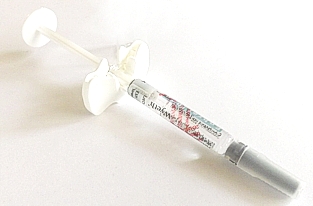
• Injections of steroid (for inflamed joints) or hyaluronans (a
viscosupplementation for Osteoarthritis which may in rare cases be used
for treatment of Knee OA). These are usually injected directly into the
painful joint. Although some evidence suggests hyaluronans may be helpful
for some people with knee OA they are quite expensive and need to be
considered in discussion with your doctor or nurse.
• Steroid treatments - these include tablets, injections (into a muscle)
or infusions (a needle is inserted into a vein and a bag of fluid mixed
with the steroid are given to you over a period of a few hours).
• The use of disease modifying drugs or biologic therapies for some types
of arthritis (see the section on medications)
Other ways of reducing pain - Non Medication Options back
to top
2. Hot and cold packs.
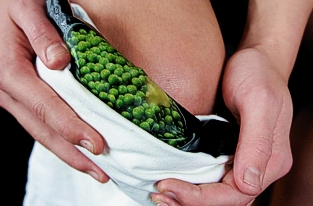
These pains can be used useful to reduce pain. Cold packs can be purchased
over the counter and are usually stored in the freezer. Some people find
them a little uncomfortable when first applied to the painful joint but do
gain some relief for a little while after applying. They can be used
frequently during the day and provided you do not damage the skin by
putting the frozen pack directly in contact with your skin (it is best to
have a fine cloth around the pack) they are very safe and without side
effects.
Hot packs may be useful especially for stiff or aching joints and muscles.
Again you must be careful that you do not damage your skin. Skin that is
painful may not be able to properly recognise when the heat is burning or
damaging the skin. Make sure that you don’t let the pack get too hot and
test the temperature before applying to a painful joint. As with cold
packs it would be advisable to wrap a fine piece of cloth around the pack.
These packs are made from a range of products and can be heated in the
microwave - but do make sure that you use the packs as advised by the
manufacturers.
3. Transcutaneous Electrical Stimulation (TENS).
TENS machines have two small electrode pads that need to be attached to
the skin. The TENS machine works by providing mild electrical impulses
that stimulate the touch sensors in the skin reducing the pain messages to
the brain. A small battery powers the electrical impulses, the level and
type of impulses can be adjusted. TENS machines can be purchased from
chemists. Although TENS machines may be useful to some people it might be
worth taking specialist advice from the hospital
physiotherapist/practitioner who may be able to advise you as to whether
you might benefit from using a TENS machine. Research evidence to date has
not proved conclusive evidence of its value for chronic pain (Moore et al,
2003. Bandolier's little book of pain, Oxford University Press. ISBN
0-19-263247-7)
4. Pacing and rest
Pacing is a term used to modify the stress or workload levels on your
joints as well as learning to rest yourself mentally and physically. It
means finding ways in your life to balance times of work with times to
rest. Painful joints may need some recovery time - for example, changing
tasks from standing or walking to sitting or lying down to read a book.
This takes the weight off the joint (or joints) and allows some of the
muscles that have been doing most of the work to relax. Pacing also means
recognising especially bad or difficult days and finding ways of being
flexible about how much you should do that day.
Resting can sound difficult, especially if you are being asked to rest
when you are experiencing pain, or have plenty of tasks that you want to
do today and don’t like resting anyway! But…learning relaxation techniques
can relieve the tension and ultimately constant pain messages to the
brain. Fatigue will affect how you perceive pain and how you cope with it.
Learning ways to relax completely can be a real trial for some people
others, are gifted at it! You need to find the best way to help you relax.
Some people find certain types of music help others like absolute quiet.
It is useful to try resting on a bed for a short time each day when the
pain is bad, lying in a dark room, without any additional noises or
distractions that remind you of things to be done. A short sleep may even
be worthwhile. Set an alarm to ensure that you only sleep for a certain
period of time so that over time you don’t lose your normal night sleep
patterns.
5. Managing Fatigue
Fatigue is a very common symptom for those who are suffering with pain or
difficult mobility problems. Fatigue can also be an added problem with
some types of inflammatory joint diseases such as Rheumatoid Arthritis,
Psoriatic Arthritis, and Ankylosing Spondylitis.
Fatigue is often not mentioned or fails to be recognised and sometimes you
may feel that you are the only one who is exhausted and failing to cope -
interestingly when I see new patients who come along having recently been
diagnosed and 'I say are you feeling exhausted ?' they look relieved and
surprised to have their fatigue recognised. Many say they felt they must
be 'weak' or a 'being pathetic' because they were feeling so fatigued. It
comes, in a way as a relief to many to realise that it can be part of a
disease like RA.
Fatigue can be an indicator that the disease has become more active,
particularly with diseases such as Rheumatoid Arthritis, and may be
accompanied by increasing length of Early Morning Joint Stiffness. In
addition fatigue can be as a result of anaemia.
Managing fatigue will be part of an overall strategy as highlighted in the
same way as coping with pain. It will require a combined approach using
rest, passive exercise and better pain control.
6. Swimming and Hot baths
Water takes away gravity, resting your joints from their weight bearing
work. It means that joints can move more freely and the muscles can have a
greater degree of movement without taking any specific strain. Sometimes
hydrotherapy treatments are offered to help your mobility and teach you
how to improve the range of movements in your joints. These exercises can
sometimes be continued in warm local swimming pools where local support
may also be provided. You can find out about the availability of such
facilities by contacting your local leisure centre or health club.
Hot baths help relaxation and gives a sense of well being and pain relief.
People who experience early morning joint stiffness often find taking
their pain medication then getting into a hot shower or bath will help
their pain control and reduce some of their stiffness.
7. Exercise
The balance of rest, relaxation and exercise can improve pain control and
maintain mobility. For most types of arthritis exercise is essential and
beneficial. This is because joints and muscles need to move regularly and
muscles need to maintain their muscle strength and bulk. Some of the pain
experienced in arthritis is related to the stiffness that can be
experienced following periods of inactivity or early morning stiffness
(EMS).
The different types of exercises will vary according to the type of
problems you have and the difficulties you are experiencing. If you are
seeing a rheumatologist they will refer you to a physiotherapist to advise
you on an exercise regime. However it is important to know whether you are
doing 'active exercise' or 'passive exercise'. There are some excellent
leaflets and booklets advising on exercise (www.arc.org.uk and
www.arthritiscare.org.uk)
Active exercise
Active exercise is what most people do to keep fit and reduce weight. It
involves things like going for a walk or gardening. They often require the
body and the joints to bear weight and work against a force - such as
lifting or digging in a garden spade.
Passive exercise
This is where the joints and muscles are worked but not against a specific
weight or force. It involves moving the muscles and joints through a wide
range of movements, this can be done while lying on the bed or sitting in
a chair. The Arthritis Research Campaign has produced a leaflet that can
be used as a wall chart (www.arc.org.uk).
If you have any doubts about the safety or your ability to undertake any
exercise regime you should discuss this with your own doctor before
starting an exercise programme.
8. Weight Loss
It is very difficult to lose the weight, particularly when problems with
mobility significantly reduce opportunities to undertake vigorous exercise
regimes. However, it is worthwhile knowing that weight reduction for
individuals with OA will be of benefit. People with arthritis who are
overweight have greater damage to the joints and increasing difficulties
with mobility and exercising. Losing weight can be a very effective way to
reduce your pain. It may be worth seeking advice about a suitable diet
that will help you lose weight yet ensure you maintain a healthy balanced
diet.
9. The use of aids (walking sticks, joint protection, footwear).
For healthcare professionals, encouraging individuals to use various aids
or assistive devices is often the hardest thing to achieve, yet one of the
simplest ways of reducing fatigue, improving mobility, reducing pain and
protecting joints. This is partly because most of us simply do not wish to
consider the use of any form of aid seeing it as recognition of a problem
or a 'giving in'. Yet the use of some equipment can be liberating,
allowing more energy and time for other activities. Coming to terms with
using any form of aid often is most effective when supported by help and
advice from a member of the multi-disciplinary team.
Walking aids
The way we use our body and our joints is taken for granted when
everything works well. When a joint fails or is painful it is common for
people to continue to walk, go up and down stairs etc but with pain and
increasing difficulty. It is often achieved without the use of aids but
usually is achieved at the cost of the other joints having to take the
extra weight. This means that other joints will take the weight but not in
a way that the joint is designed to. This means the weight will be
distributed differently and add an extra load to healthier or less painful
joints.
An example of this is when you have a painful knee. To continue to walk
you protect the painful joint by throwing your weight onto the 'good'
knee. This results in the body changing the mechanics of how you position
your back before movement, distributing the weight onto the 'good' knee
joint. The good knee has to cope with the abnormal load by distributing
the force through other joints. This can result in not only a painful knee
but in addition a painful ankle or hip too. To minimise the risk of this a
walking stick could help by taking some of that additional load and
maintaining a better body posture. When the knee settles and pain and
function improves you can then store the walking stick away.
Joint protection
Some types of arthritis or functional problems can be improved with the
use of joint protection. It is quite common for people who have some types
of arthritis (e.g. Rheumatoid Arthritis) to be assessed by an occupational
therapist/ or rheumatology practitioner. The therapist or practitioner
will assess the activities you undertake and see where stress on joints
can be reduced to protect the joints and keep them in their normal
alignment. The process of assessment will often include providing
practical advice on how to avoid abnormal stresses or forces on the joints
and can include additional pieces of equipment such as kettle tippers
reducing the need to lift a full kettle of water. When joints are more
effectively protected pain can be reduced.
Footwear
Podiatrists are specialist trained in managing foot problems and other
difficulties related to the foot and diseases that affect the feet. For
many forms of arthritis early practical advice on footwear can be very
effective. Our joints work as shock absorber taking for our bodies. When
we are young there is a tissue called cartilage that lines all healthy
joints and is nice and spongy and provides an effective cushioning for
movement. As we grow older this cartilage become less flexible and in
osteoarthritis may become worn away allowing two joints to move against
each other without the cushioning effect of cartilage. One way of
improving the 'shock absorber' or cushioning effects that used to be
achieved by our young healthy joints is to ensure that shoes have good
cushioning included in them. The trainer is a good example of cushioning
support that a shoe can provide.
However, there are a number of problems that might be experienced with
different types of arthritis. A thorough foot assessment often proves very
useful. The assessment will look at whether the arch support of your foot
is maintained, and that you are bearing you weight down effectively onto
your ankle and foot. Sometimes the use of an arch support can be very
effective.
10.
Complimentary or alternative therapies back
to top
Anyone with a chronic illness whatever that illness will be enticed by the
vast array of products that promises a cure when traditional medicine has
failed to provide the same promise. It is natural to seek other solutions
and find a way to resolve some of the difficulties that arthritis might
put in your way. It is not possible to cover the complete range of
complimentary therapies available and some outlined on this page are used
to provide examples. Further information can be accessed from the patient
information websites or the (arc) patient information leaflet
www.arc.org.uk
The term complimentary or alternative therapy is used to describe various
types of non-medical treatments.
Many complimentary therapies have not been studied to ensure they are safe
and effective or have been inadequately researched from a scientific point
of view. There is now great interest in undertaking research projects to
help healthcare professionals and individuals with arthritis understand
more about the risks and benefits of complimentary therapies. Not only to
see how effective these alternative therapies are but also to see the
problems people experience when taking these therapies. The cost of most
complimentary therapies comes directly out of the pockets of the
individual consumer and these costs need to be measured against benefits
of the therapy
It is important to beware of 'magic promises'. In my own experience I have
asked many patients to bring paper cuttings, magazine articles and
advertisements about specific treatments, aids or supplements to the
clinic to assess them together. We review the information and discuss
them, examining the claims being made. At times, hope, and the wish to
believe and want a 'miracle' can result in your usual critical scrutiny of
information being ignored.
Remember that may complimentary remedies such as food supplements are not
subject to any type of studies to ensure they are safe nor do they have
the same levels of quality control (unlike traditional medical drugs where
we tend to know most of the good and bad points and advise you of them).
Equally, natural products are not necessarily safe for you to take. The
foxglove plant grows well in our gardens - and very pretty it is too! But
from the foxglove comes digitalis, a medicine used in very small
controlled doses to improve heart function. It can however, be poisonous
given in larger doses.
There is no legal requirement to test for safety or quality control with
food supplements, complementary or alternative therapies. There are
specific rules to ensure that they provide the benefit expected or hoped
for. Tablets and treatments prescribed by your doctor do have to undergo
such testing before they can be prescribed to you. It is important that
your doctor knows what supplements or alternative therapies you are
taking.
• Acupuncture
Studies for RA have shown no benefit using acupuncture for pain relief.
There are different schools or 'styles' of acupuncture. Acupuncture is the
use of special needles to stimulate 'acupuncture points' that reduce pain
sensations. It is suggested from some small research studies that
acupuncture might provide some pain relief to some people with
Osteoarthritis. It is suggested that it is often needed on a regular basis
for pain control – but if you are going to spend money make sure you have
a clear way of measuring the benefit over time – and then review whether
it has been useful to you. Early initial reviews of small studies show no
clear benefit for neck, back pain or fibromyalgia.
• Aromatherapy
Aromatherapy is the use of massage and essential relaxing oils. It is
important that if you have any painful or unstable joints you check with
your doctor before having a massage and you tell the practitioner giving
the massage that you have arthritis (and the type of arthritis you have)
and any particular joint problems you have. If you are receiving tablets
from your doctor it is always worth letting your doctor know you are
having aromatherapy.
• Homeopathy
When an Analysis of a number of small research studies were reviewed
homeopathy demonstrated no significant benefit to patients with arthritis.
However further large scientific research studies need to be undertaken to
thoroughly evaluate any possible benefits.
• Food supplements
When considering herbal remedies or food supplements it is important to
remember that there have been some deaths as a result of the side effects
of herbal medication or interactions with traditional medicines prescribed
by a doctor. Always make sure that you check with your doctor if you are
taking additional medicines and let them know what other complimentary
therapies you are taking
Glucosamine Sulphate & Chondroitin
There have been a number of large studies examining the benefit of
Glucosamine Sulphate against non-steroidal anti-Inflammatories (or
sometimes against no other treatment). Most studies to date on the use of
Glucosamine Sulphate have shown a small to modest benefit in the form of
pain relief for some but not all patients participating in the trial. The
benefits were more likely to be achieved if the dose of Glucosamine
Sulphate was 1500mg daily although the tablets can vary in strength and
purity. The long term risk and benefits of treatment are yet to be
studied. In some studies side effects from Glucosamine Sulphate have
included stomach pain, tenderness, heartburn, diarrhoea and nausea.
Further large studies of Glucosamine products are needed, particularly as
the different products vary in a number of ways and quality control issues
of the different products people buy may vary significantly. It is
important that your doctor knows you are taking Glucosamine Sulphate
because the side effects experienced may be considered to be as a result
of your other medications.
The benefit of Chondroitin sulphate still need to be studied in large
groups of patients although some research suggests that Chondroitin (at
doses of between 800-1200mg a day) gave pain relief to some people which
was a little better than no treatment and reduced the need to use other
forms of pain relief such as NSAIDs. However these are only small studies
and further research is required. To date the evidence does not show that
it helps the bone recover from the damage it has sustained.
These products are sold as food supplements and as such are not regulated
as a medicine and dosages may vary. If you take Glucosamine (1500mg a day)
for three months and achieve no improvement in pain relief it may not be
of value to continue.
3 Omega fatty acid supplements
The 3 Omega fatty acids are found in fish such as salmon, sardines,
herrings and fish rich in fatty acids. A modest improvement in tender
joints and reduction in the length of time for morning stiffness were
demonstrated in a number of studies analysed. The 3 Omega fatty acid
supplementation has been shown to have effect for some individuals at
doses of between 3 - 6 grammes a day. However as with all other
supplements the long term effects are not yet known nor the potential
interactions with traditional medicines. The cost of the supplementation
should be balanced against the possible benefit you might experience.
• Herbal preparation - e.g. devil's claw, feverfew, St. John's Wort.
Many of the herbal preparations have not been thoroughly evaluated from a
scientific point of view to ensure safety and efficacy. It is as yet
uncertain as to whether there are any potential harmful effects of long
term use of herbal remedies or the possible interactions that these
preparations may have with traditional medicines.
• Cannabis
Although currently Cannabis is an illegal drug it has been used by
individuals for pain control and reduction of spasms or convulsions. In
its current form (unregulated and legal status) there are a number of
problems for patients with arthritis. Firstly, taken in cigarette form the
inhaled cannabis has the potential to affect your lungs in a similar way
to tobacco, particularly with the amount required on a regular basis to
achieve an effective level of pain control. Studies to see if pain control
was achieved using cannabis were small and disappointing especially as
tablet preparations failed to give significant benefit. Further large
studies need to be undertaken
• Dietary Changes
Many people feel that changing their diet will improve their health and
ultimately any illness they have or symptoms they experience. However to
date there is no evidence that supports any specific food products being
excluded from the diet that provide pain relief benefits to everyone with
arthritis. It is important with many long term chronic diseases such as
inflammatory joint disease, to ensure you eat a healthy balanced diet. The
other difficulty the nature of the arthritis changes from day to day and
this may be the natural pattern of the arthritis, not a change in diet. So
it is difficult to measure the possible changes and attribute them to a
change in diet.
Some people who have had arthritis for a long time and used a carefully
managed method of excluding one particular food that they think makes
their arthritis worse do feel they gain benefit from excluding one
specific food that makes their arthritis worse. It doesn’t work for
everyone nor are the foods that appear to cause the problem the same for
everyone. In research trials a small group of people taking part have been
shown to benefit a little for short period of time but no one specific
foodstuff has been clearly identified as providing benefit in the sense of
improving the arthritis or their symptoms in the long term.
We do know that it is best for everyone to have a diet that is rich in
fish oils or (essential fatty acids) plant oils and low in the unhealthy
types of animal fat which are bad for our heart. A detailed discussion on
diet and arthritis can be found on the NRAS website
(www.rheumatoid.org.uk) and arc have an excellent information
leaflet on their website (www.arc.org.uk).
If you are trying to decide if your pain control is better it may be
helpful to score your pain out of 10. Write down the level of pain before
you changed your pain control and then review the score the week after
changing your pain control strategies. It is often useful to have some
sort of score like this to be able to discuss the differences in your pain
control with healthcare professionals you see. See
How to manage your
arthritis
|